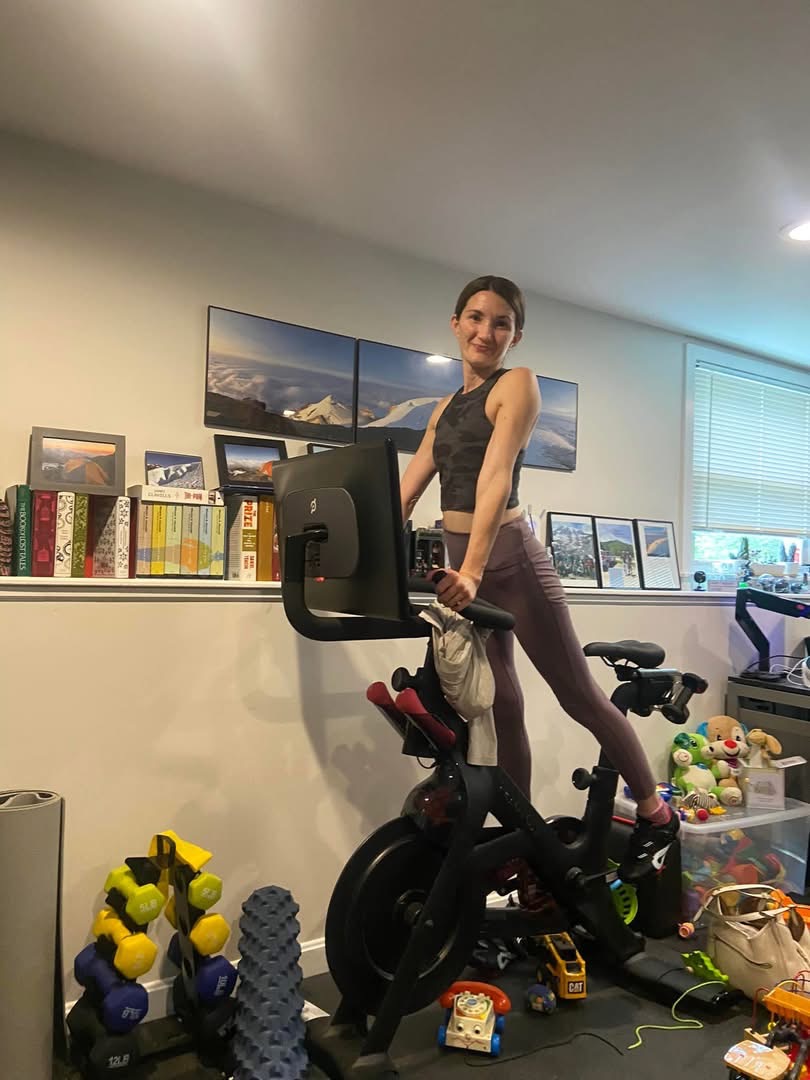
(Pic of a very happy Jess getting back on my bike pain free!)
Well…this year, the trainer became the client.
Back in January, my knee started bothering me. Like many fitness professionals (and probably many of you  ), I convinced myself it would just get better. Instead, I ignored it until walking up and down the stairs hurt, workouts became painful, and even everyday walking wasn’t comfortable.
The diagnosis? A pretty significant meniscus tear.
I’ll be honest—I was discouraged. Spring and summer are my favorite seasons to be active. My family loves hiking, biking, swimming, and spending time outdoors, and movement is such a huge part of who I am. I worried that this injury would take all of that away.
Today, I’m incredibly grateful to say I’m about 90% recovered—and, for now, I’ve been able to avoid surgery through consistent rehabilitation and lifestyle changes.
Now, this isn’t medical advice. Every injury is different, and I absolutely encourage anyone dealing with pain to work with their physician, physical therapist, or other qualified healthcare providers.
But I wanted to share a few things that made the biggest difference for me:
 1. Respect the healing process.
I had to put my ego aside. Squats, lunges, hiking, biking—they all had to take a back seat for a while. Healing isn’t quitting; it’s preparing your body to come back stronger.
2. Commit to rehab.
Even as a trainer, I needed another set of eyes. Physical therapy helped identify weaknesses and movement patterns I couldn’t fully see on my own. The real magic happened by consistently doing my home exercises—sometimes even adding them after upper-body workouts so I was strengthening those supporting muscles almost every day.
3. Prioritize nutrition.
Recovery requires building blocks. I focused on adequate protein throughout the day, plenty of nutrient-dense foods, hydration, and giving my body what it needed to repair tissue and regain strength.
4. Supplement with purpose.
For me, that meant daily protein, collagen, creatine, and a post-workout recovery supplement that includes BCAAs, collagen, and ingredients that support muscle and connective tissue repair. These became tools to complement—not replace—a solid nutrition plan.
5. Think holistically.
One of the biggest surprises for me was acupuncture. Consistent treatments helped more than I ever expected. Recovery isn’t just physical—it’s about supporting the whole person, and sometimes thinking beyond the traditional approaches can make a meaningful difference.
Most importantly, I learned that healing isn’t about finding one magic solution. It’s about stacking healthy habits together, being patient, and trusting the process.
Today, I’m back on my bike. I’m easing back into lunges. My squat strength is returning. I’m hiking again. And I’m looking forward to a summer filled with all the things I wasn’t sure I’d get to do.
If you’re recovering from an injury, don’t lose hope. Whether your path includes surgery, physical therapy, medication, holistic care, or a combination of approaches, there is so much you can do to support your body’s incredible ability to heal.
Your comeback may take time—but it is absolutely worth the work.
Here’s to a summer filled with movement, sunshine, healing, and making memories with the people we love. 

Have you ever had an injury that taught you something unexpected? I’d love to hear your story in the comments

