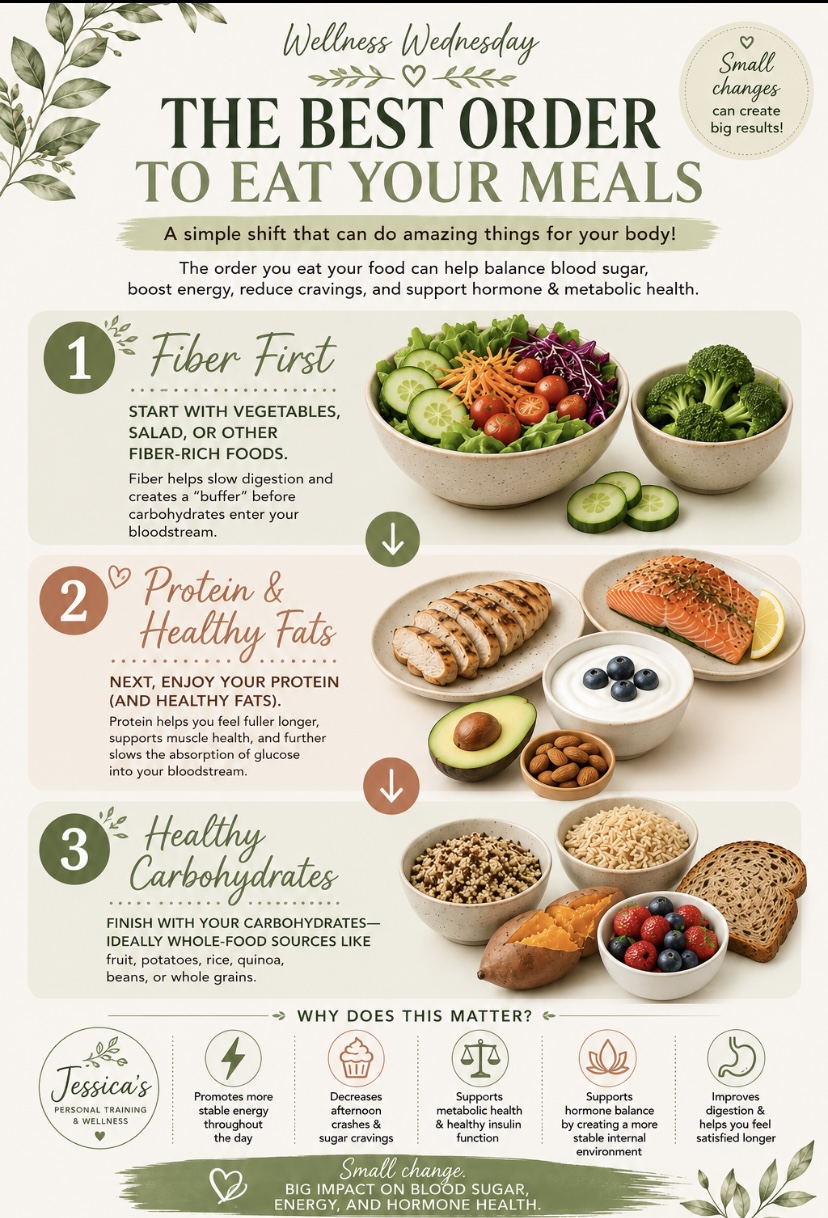
Did you know that how you eat your food—and even the order you eat it in—can have a surprisingly powerful impact on your body?
Most of us focus on what we eat (which is obviously important), but there’s another simple strategy that can help support steadier energy, fewer cravings, and healthier blood sugar levels.
✨ Try eating your meals in this order:
🥗 1. Fiber first
Start with vegetables, salad, or other fiber-rich foods. Fiber helps slow digestion and creates a “buffer” before carbohydrates enter your bloodstream.
🍗 2. Protein (and healthy fats)
Next, enjoy your protein. Protein helps you feel fuller longer, supports muscle health, and further slows the absorption of glucose into the bloodstream.
🥔 3. Carbohydrates last
Finish with your carbohydrates—ideally choosing whole-food sources like fruit, sweet potatoes, brown rice, quinoa, beans, or whole grains.
💚 Why does this matter?
Eating in this order can help:
✔️ Reduce blood sugar spikes after meals
✔️ Promote more stable energy throughout the day
✔️ Decrease afternoon crashes
✔️ Help reduce cravings for sweets
✔️ Support metabolic health and healthy insulin function
✔️ Support hormone balance by creating a more stable internal environment
This doesn’t mean you have to eat perfectly every meal. Even making this small shift a few times a day can be a simple way to support your overall health.
Sometimes the biggest improvements come from the smallest habits. This week, try changing the order of your meal instead of changing the menu—and see how you feel!
Have you ever tried this? Let me know in the comments! ⬇️
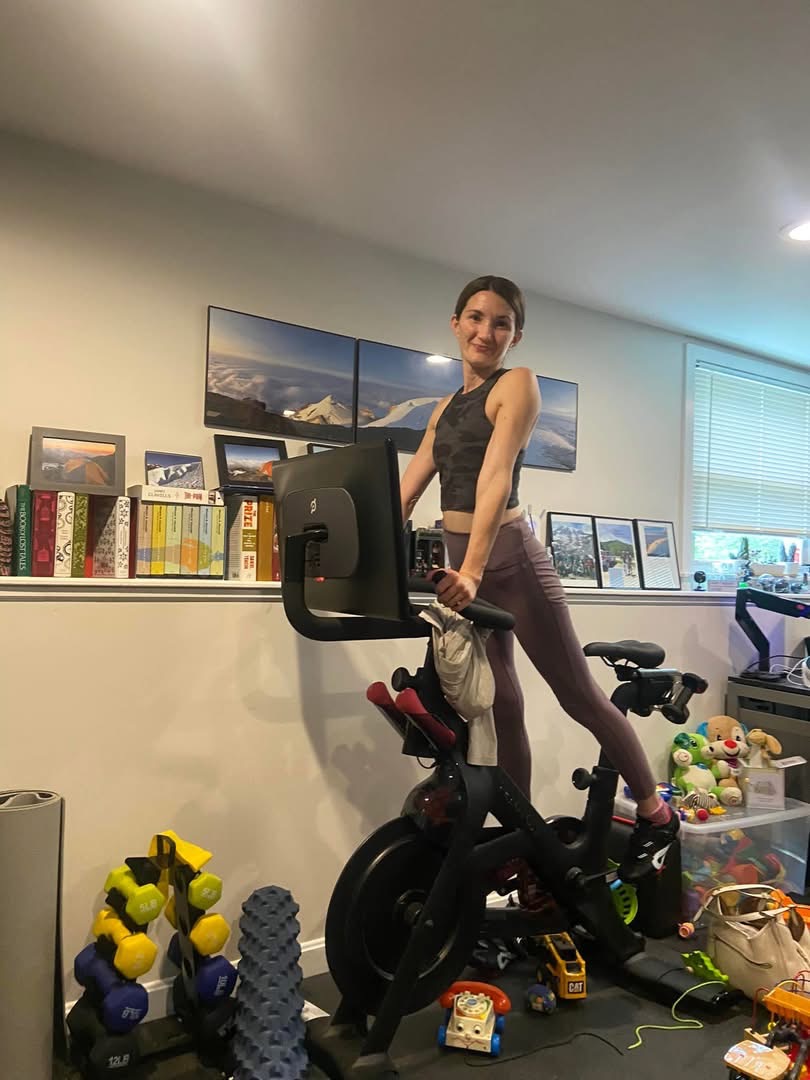
(Pic of a very happy Jess getting back on my bike pain free!)
Well…this year, the trainer became the client.
Back in January, my knee started bothering me. Like many fitness professionals (and probably many of you ), I convinced myself it would just get better. Instead, I ignored it until walking up and down the stairs hurt, workouts became painful, and even everyday walking wasn’t comfortable.
The diagnosis? A pretty significant meniscus tear.
I’ll be honest—I was discouraged. Spring and summer are my favorite seasons to be active. My family loves hiking, biking, swimming, and spending time outdoors, and movement is such a huge part of who I am. I worried that this injury would take all of that away.
Today, I’m incredibly grateful to say I’m about 90% recovered—and, for now, I’ve been able to avoid surgery through consistent rehabilitation and lifestyle changes.
Now, this isn’t medical advice. Every injury is different, and I absolutely encourage anyone dealing with pain to work with their physician, physical therapist, or other qualified healthcare providers.
But I wanted to share a few things that made the biggest difference for me:
1. Respect the healing process.
I had to put my ego aside. Squats, lunges, hiking, biking—they all had to take a back seat for a while. Healing isn’t quitting; it’s preparing your body to come back stronger.
2. Commit to rehab.
Even as a trainer, I needed another set of eyes. Physical therapy helped identify weaknesses and movement patterns I couldn’t fully see on my own. The real magic happened by consistently doing my home exercises—sometimes even adding them after upper-body workouts so I was strengthening those supporting muscles almost every day.
3. Prioritize nutrition.
Recovery requires building blocks. I focused on adequate protein throughout the day, plenty of nutrient-dense foods, hydration, and giving my body what it needed to repair tissue and regain strength.
4. Supplement with purpose.
For me, that meant daily protein, collagen, creatine, and a post-workout recovery supplement that includes BCAAs, collagen, and ingredients that support muscle and connective tissue repair. These became tools to complement—not replace—a solid nutrition plan.
5. Think holistically.
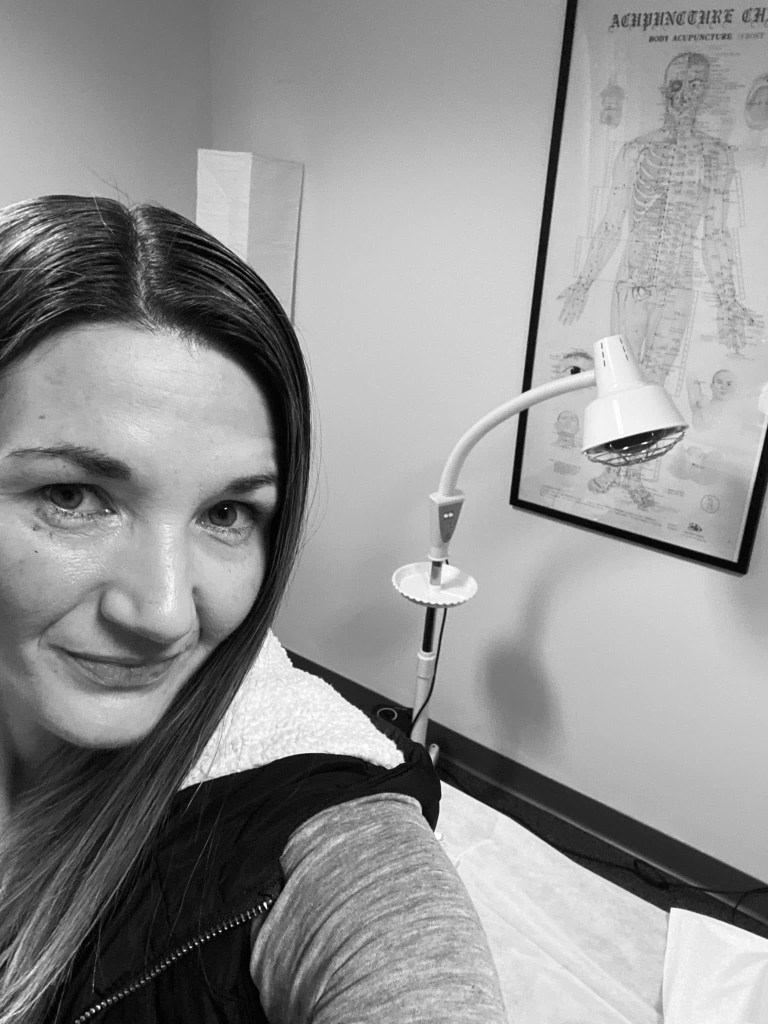
One of the biggest surprises for me was acupuncture. Consistent treatments helped more than I ever expected. Recovery isn’t just physical—it’s about supporting the whole person, and sometimes thinking beyond the traditional approaches can make a meaningful difference.
Most importantly, I learned that healing isn’t about finding one magic solution. It’s about stacking healthy habits together, being patient, and trusting the process.
Today, I’m back on my bike. I’m easing back into lunges. My squat strength is returning. I’m hiking again. And I’m looking forward to a summer filled with all the things I wasn’t sure I’d get to do.
If you’re recovering from an injury, don’t lose hope. Whether your path includes surgery, physical therapy, medication, holistic care, or a combination of approaches, there is so much you can do to support your body’s incredible ability to heal.
Your comeback may take time—but it is absolutely worth the work.
Here’s to a summer filled with movement, sunshine, healing, and making memories with the people we love.
Have you ever had an injury that taught you something unexpected? I’d love to hear your story in the comments
Hi friends! I know you see me write this post every year, but it’s so important for us to stay informed about what we’re putting in our bodies and reduce the toxic burdan on our bodies as much as possible.
The EWG “dirty dozen” list is such a great way to stay informed and empowered without feeling overwhelmed.
While I do try to purchase organic whenever possible, I also know it isn’t always affordable or accessible.
On the other hand, it can be pretty freaking hard to remember the toxic load of every bite of produce we eat.
That’s why I LOVE the “dirty dozen”. It’s much easier to remember 12 foods that we should choose organic versions of. It’s also pretty easy to print out this list or save it to your phone to refer to when grocery shopping.
So here’s your updated list to save for this year. I know it’s not always possible to buy organic- my personal rule of thumb when I can’t get organic versions of these is to avoid these produce options altogether and choose from the “clean 15” instead.
Our bodies, our choice…always. But information is a powerful tool 🙌🏼🙌🏼
I speak to my clients about this all the time, so this felt like a great topic for the first quarter of the new year. This year, I challenge you to join me in really figuring out what your symptoms are telling you, instead of guessing or covering up the symptoms…
If you’ve been dealing with chronic symptoms like:
• Fatigue
• Bloating or digestive issues
• Brain fog
• Hormone imbalance
• Anxiety
• Skin flare-ups
• Joint pain
…and you’ve been told “everything looks normal” — this is for you.
Conventional labs are often designed to detect disease.
Functional testing is designed to detect dysfunction and root causes, helping the body to access its own healing tools.
There’s a big difference.
🩸 Functional Bloodwork looks at optimal ranges — not just “in range.” It can reveal nutrient deficiencies, inflammation patterns, blood sugar dysregulation, thyroid imbalance, and stress load before things become diagnosable conditions.
🦠 GI-MAP (Gastrointestinal Microbial Assay Plus) looks deeper at gut health — identifying bacterial imbalances, parasites, yeast overgrowth, H. pylori, digestive function, and markers of inflammation and immune response. Your gut impacts EVERYTHING: mood, hormones, immunity, skin, and energy.
When we identify the root cause, we can:
✔️ Create targeted nutrition and supplement plans
✔️ Reduce inflammation
✔️ Support detox pathways
✔️ Improve digestion and absorption
✔️ Balance hormones naturally
✔️ Restore energy and resilience
Instead of masking symptoms, we support the body in doing what it was designed to do — heal and regulate.
Testing isn’t about fear.
It’s about clarity.
It’s about empowerment.
It’s about optimizing — not just surviving.
If you’ve been feeling “off” but don’t have answers yet, it might be time to look deeper. I am always happy to share a discount for functional bloodwork or refer you to some amazing colleagues of mine who do root cause testing and an imcrefible deep dive into your health.
Let’s chat about…the benefits of oil pulling. Cause there are lots!
You guys know I’m all about simple, sustainable practices that uplevel our health and move the needle a bit at a time toward improved wellness, so this topic about a simple health habit you can add on to your daily routine felt appropriate.
So, let’s chat about oil pulling…
Maybe you’ve heard of this before or maybe you think I’m crazy?? It’s cool either way 🤷🏻♀️ I started a few months ago and it’s a simple practice that feels like a really awesome start to my day.
Let me start with the basics, in case this is a new topic for some of us:
Oil pulling is an ancient Ayurvedic practice that reflects a core principle of holistic health: everything in the body is CONNECTED. The mouth is not separate from the rest of the body — it is the gateway, influencing digestion, immunity, inflammation, and even nervous system balance.
Oil pulling involves swishing about 1 tablespoon of oil (commonly coconut or seaame oil) in the mouth for 5–15 minutes, then spitting it out. This practice is traditionally done first thing in the morning, before eating or drinking.
But Jess- how does this relate to whole-body wellness??
So glad you asked!
The mouth contains a complex ecosystem of bacteria. When that balance is disrupted, it can affect more than just teeth and mouth care. By helping reduce harmful bacteria in the mouth, oil pulling may support a healthier internal environment overall. We love this! Here are some benefits ⬇️⬇️
✨Inflammation support
✨Improved oral health
✨A ritual for nervous system regulation
How to get started:
✨Do it in the morning before food or drink
✨ Start very small and work up to 10–15 (happy to share the exact ramp up protocol I used to get started for anyone interested)
✨Spit the oil into the trash (not your sink!) , then rinse and brush as usual
(As with any health practice, you can/should do your own research and decide if this is right for you! )
Sometimes, it’s the simplest rituals that create the most meaningful shifts. Would love to hear if you’ve integrated this wellness habit in your routine yet? ✨✨✨
Time to tell the nervous system to chill the heck out 👌👌
You guys know I’m all about holistic wellness practices. So how could I not share one of the most powerful tools in my own wellness toolkit??
I have benefited from acupuncture for 10 years now- to help with fertility treatments, ease chronic digestive and inflammatory conditions and support me in postpartum anxiety. So I felt compelled to hop on here today and share some of the reasons you might want to explore this modality for your own healing or general wellness ✨✨✨
Acupuncture is a gentle, time-tested therapy that helps support the body’s natural ability to heal and restore balance.
By stimulating specific points in the body, acupuncture works with the nervous system to reduce stress, improve circulation, and encourage the body to move out of “fight or flight” and into a state of rest and repair.(The importance of this rest and repair state cannot be understated, friends!)
Some of the benefits of acupuncture include:
✨Relief from chronic pain such as neck, back, joint pain, and headaches ✨Reduced stress, anxiety, and tension ✨Improved sleep quality and energy levels ✨Support for hormonal balance and menstrual health ✨Better digestion and immune support
Rather than focusing on just one symptom, acupuncture looks at the whole person—helping address the root causes of imbalance while promoting overall wellness. (Again, the importance of which cannot be stressed enough)
If you’ve been feeling run down, tense, or out of sync, acupuncture can be a powerful and calming addition to your wellness routine.
I’d love to hear if you’ve tried acupuncture and some of the effects you’ve noticed too ✨✨✨
Ok, maybe you won’t be as excited about this as me, but it was an important add to my holistic wellness journey and I’m psyched!
I got my mercury amalgam filling removed 🙌🏼🙌🏼 If you are also someone who grew up getting mercury fillings- listen up: it’s probably time to see a biological dentist to get them (safely) removed. (Note: please please please make sure you see a biological dentist for this!!) But also- biological dentistry may be an important part of your health journey no matter what!! Read on ⬇️⬇️⬇️
🌿
✨✨✨Wellness Wednesday✨✨✨
Why Consider a Biological Dentist?
When we think about wellness, we often picture nutrition, movement, stress reduction… but oral health is just as connected to whole-body health. That’s where biological dentistry comes in. 🦷✨
A biological (or holistic) dentist looks at the mouth as part of an interconnected system — not an isolated set of teeth. Here are some key benefits:
🌱
Whole-Body Approach
Biological dentists consider how dental treatments impact the entire body. They focus on reducing inflammation and supporting long-term overall health, not just fixing problems as they arise.
🧪
Biocompatible Materials Instead of a one-size-fits-all approach, they choose materials and ingredients that are gentler, non-toxic, and better tolerated by sensitive individuals. This can be especially helpful for people with allergies or chemical sensitivities, but important for all of us!
Safer Removal of Old Dental Materials If mercury fillings or other outdated materials need to be removed, biological dentists typically use strict safety protocols to minimize exposure and protect both the patient and the dental team. Exposure to heavy metals can easily happen with filling removal, so it’s important to use the SMART removal method!!
🌬️
Focus on Airway + Breathing Many biological dentists assess airway function, tongue posture, bite alignment, and breathing patterns — all of which influence sleep quality, headaches, digestion, sinus issues and even stress levels.
🦷
Prevention Through Root-Cause Care Rather than treating symptoms alone, they explore potential underlying contributors like nutrition, microbiome imbalance, chronic mouth breathing, or sleep issues. This can help reduce recurring problems like cavities, grinding, or gum inflammation.
⚖️
Gentle Approach for Sensitive Patients People with anxiety, sensory sensitivities, or a history of negative dental experiences often find biological dental offices feel calmer, slower-paced, and more patient-centered. I know I sure have found this to be true 🙏
💚
If whole-body health is your priority, a biological dentist can be an amazing addition to your wellness routine. I’m just trying not to beat myself up that I didn’t start this earlier, but better late than never, right ?!?!
Your mouth is a gateway to the rest of your body — caring for it with a root-cause, integrative approach can make a real difference in how you feel day to day.
I’d love to hear from you: have you made this transition yet???
In my challenge group this month, we’re focusing on veggie intake, so today’s topic seemed like a good fit.
Did you know that most adults need 5–9 servings of fruits and veggies every day?? Did you also know most adults are getting 1-3, at most 😬. BUT the good news is, it’s easier than it sounds to meet this goal, so let’s talk solutions!! 🥦🍓
Colorful fruits and veggies do SO much for your body:
✨ Boost immunity with vitamins A and C
✨ Support natural detoxification through fiber and antioxidants
✨ Aid digestion and keep your gut healthy
✨ Reduce inflammation and protect your cells from oxidative stress
✨ Increase energy and promote a balanced mood
Try adding color to every meal and snack:
✅ Spinach or peppers in your eggs or a handful of spinach in your morning smoothie
✅ A side salad with lunch
✅ Roasted veggies with dinner
✅ Fruit and yogurt or raw nuts as your afternoon snack
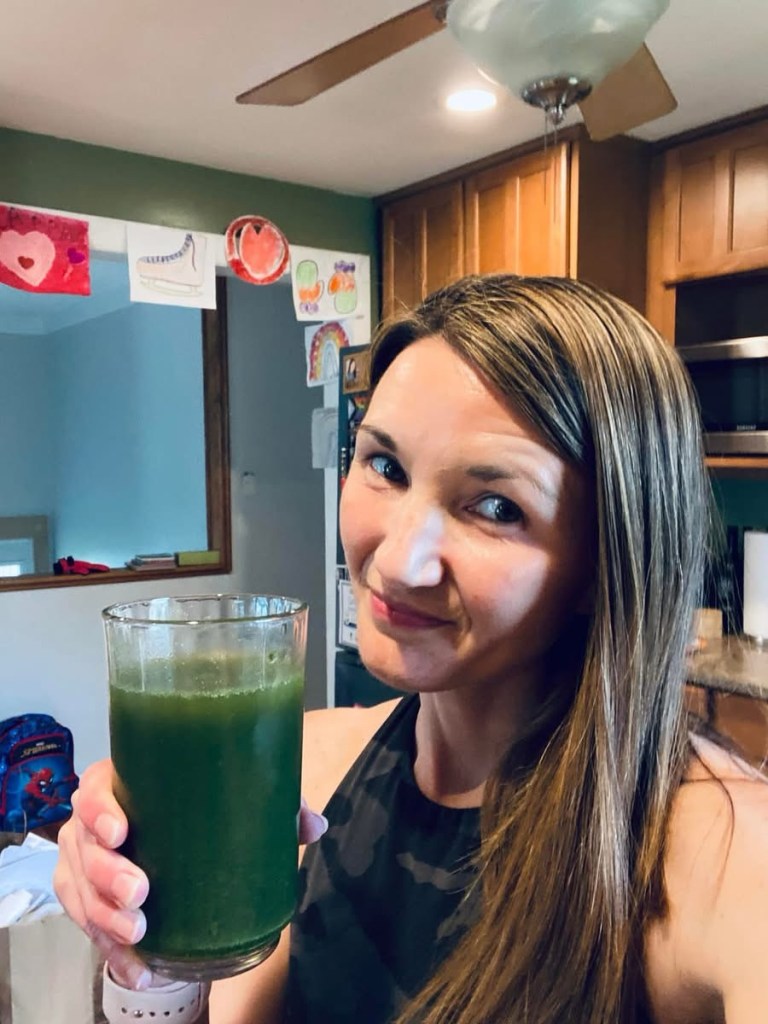
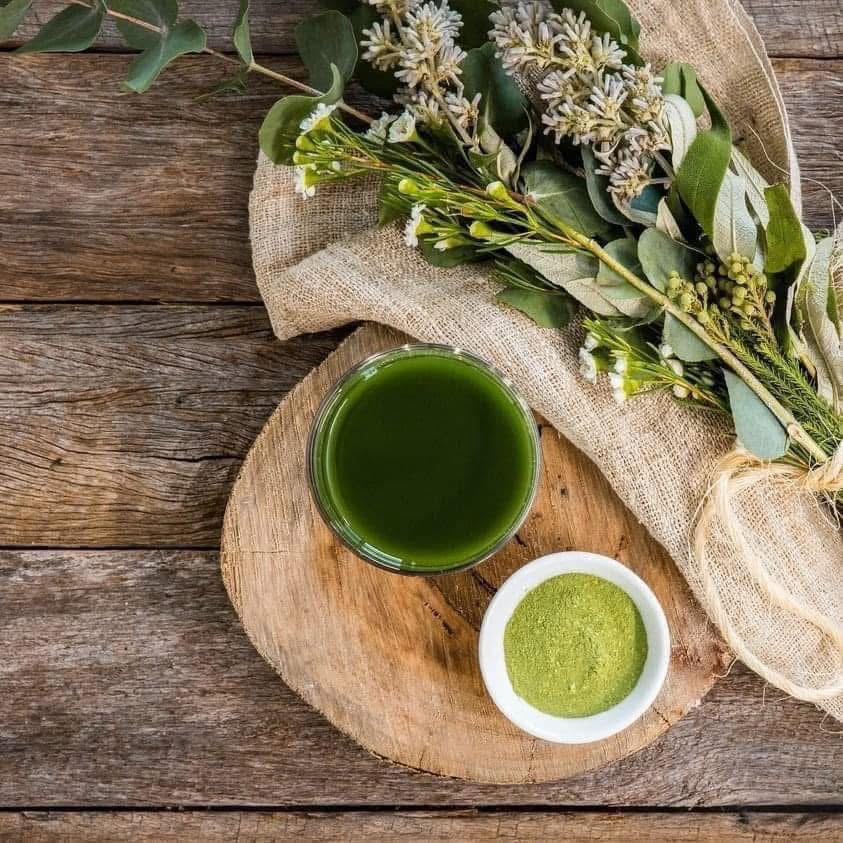
✅add a scoop of organic greens powder to your water bottle for two servings of veggies each day
This green superfood drink is full of 2 servings of organic, non GMO veggies 👌👌 Doesn’t get any easier than this!
Small, consistent choices make a big difference for your long-term health and vitality. 💚
You all know how passionate I am about maintaining our physical health, but I’ve also really been loving learning about all the ways we can improve our brain health. Which, FYI…it’s NEVER too early to start thinking about!!
Your brain runs the show, so let’s give it some love! Here are a few simple ways to keep it sharp and happy:
👉 Move a little every day – walks, workouts, even dancing in your kitchen count!
👉 Get good sleep – your brain needs that reset button just as much as your body. Aim for heading to bed just 15 minutes earlier each week until you hit the 7-9 hours of recommended sleep (always a work in progress for me).
👉 Learn something new – puzzles, books, or even a new hobby to keep your mind strong.
👉 Stay connected – chatting with friends and family boosts brain and mental health too.
👉 Chill out – stress weighs on your brain, so make space for calm. Daily gratitude journaling and meditation are my fave ways to incorporate this.
👉 Drink your water – hydration = better focus + energy. And make sure you’re adding CLEAN electrolytes!!
👉 Supplement smartly – things like omega-3s, vitamin D, magnesium, creatine and nootropics can give your brain an extra boost—just make sure to choose quality and check what’s right for you. You know I’m always happy to share my fave brands!
✨✨And, if you’re free this Saturday, join my friend Cherie at this incredible brain health workshop. You will learn SO much and come away with practical tips to implement in your life.
I’m currently focusing on consistently taking my omega 3 supplement, using clean electrolytes every day and spending time engaging in a hobby a few times a week instead of working in every moment of spare time. I’d love to hear what you’re incorporating to boost your brain!
Little things add up—your brain will thank you later 💛
 ), I convinced myself it would just get better. Instead, I ignored it until walking up and down the stairs hurt, workouts became painful, and even everyday walking wasn’t comfortable.
 1. Respect the healing process.








 Jessica's Fitness