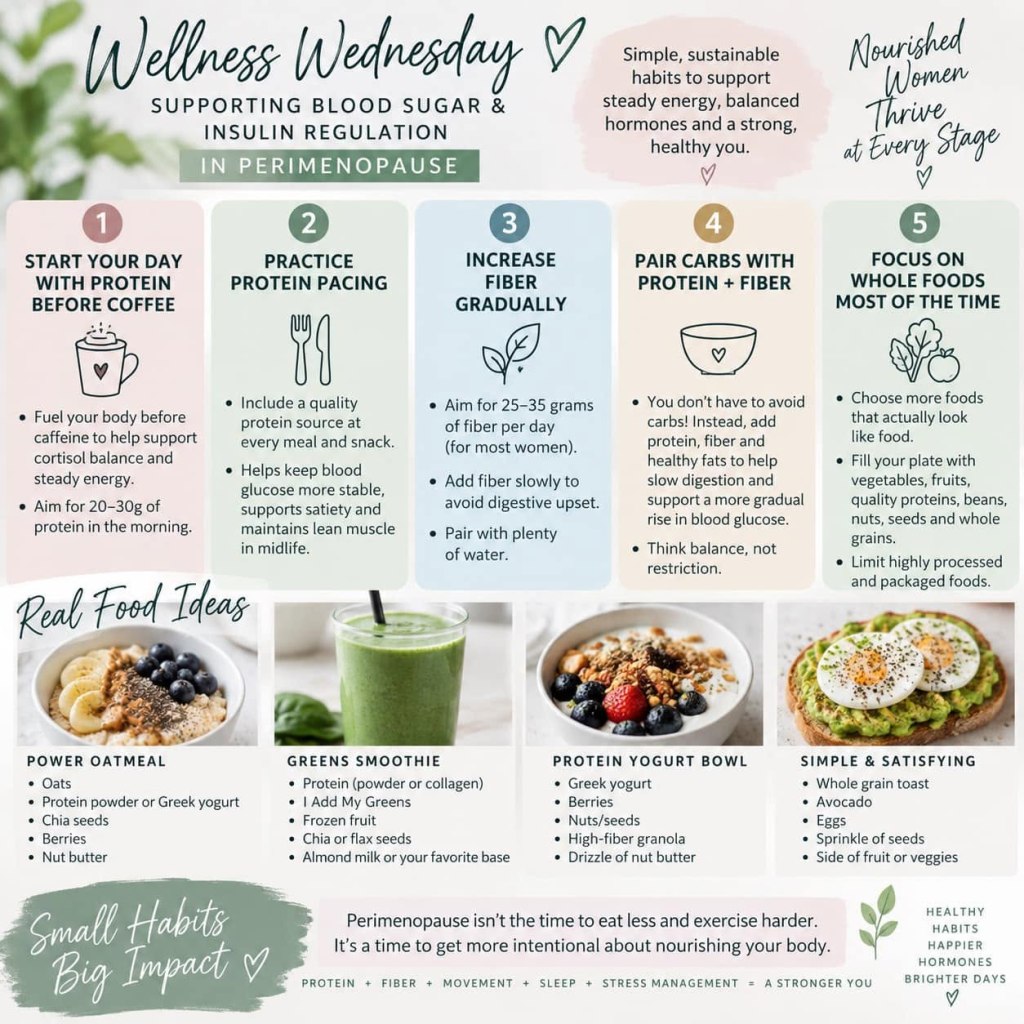
Last week, I shared a little about my own experience navigating perimenopause—and one thing I’ve been paying even more attention to during this season is blood sugar regulation.
Hormonal fluctuations during perimenopause can influence metabolism, appetite, energy, sleep, and how our bodies respond to insulin. While we certainly don’t need to become obsessed with our blood sugar numbers, there are some simple daily habits that can help support more stable energy and fewer of those “I need something sweet RIGHT NOW” moments. 
Here are a few of my favorites:
 1. Start your day with protein BEFORE coffee.
Instead of waking up and immediately reaching for coffee on an empty stomach, try getting some protein and nourishment in first.
Think:
• Eggs + avocado toast
• Greek yogurt + berries + nuts/seeds
• A protein smoothie
• Cottage cheese + fruit
• Oatmeal paired with a protein source (I love adding a scoop of protein powder to my oats or overnight oats)
This gives your body some actual fuel to work with before adding caffeine to the mix and can be especially helpful for supporting steadier energy in the morning.
 2. Think “protein pacing” throughout the day.
Rather than getting most of your protein at dinner, try distributing protein across your meals and snacks.
A simple goal: include a quality protein source every time you eat.
Protein paired with carbohydrates can help slow digestion and support a more gradual rise in blood glucose while also helping with satiety and maintaining lean muscle—which becomes especially important as we move through midlife.
 3. Increase your fiber—gradually!
Fiber is another HUGE piece of the metabolic health puzzle.
A general target for women is around 25–35 grams of fiber per day, although individual needs vary.
If you’re currently eating much less than that, don’t go from 10 grams to 35 overnight!  Gradually increase your intake while also drinking plenty of fluids.
Some easy ways to add more:
 Berries
Chia or flax seeds
Avocado
Beans & lentils
Vegetables
Nuts & seeds
Whole grains
Fiber-rich smoothies
And one of my easy smoothie hacks is adding my greens powder to a shake or smoothie for an extra boost of organic greens + fiber without making it complicated.
 4. Pair your carbs with protein + fiber.
You don’t have to eliminate oatmeal, fruit, potatoes, rice, or other carbohydrates!
Instead, think about what you can ADD.
For example:
 Oatmeal + protein powder/Greek yogurt + chia seeds + berries
Yogurt + berries + nuts/seeds
Apple + nut butter + chia/flax
Smoothie + protein + greens + berries + chia
Toast + eggs + avocado
It’s not about fearing carbohydrates. It’s about creating a more balanced meal that provides protein + fiber + healthy fats + carbohydrates.
 5. Focus on whole foods most of the time.
The foundation doesn’t have to be complicated.
More foods that actually look like food. 
More vegetables, fruits, quality proteins, beans, nuts, seeds, whole grains and minimally processed foods.
And fewer highly processed foods that are easy to overeat and often don’t provide much protein or fiber.
The goal isn’t perfection. It’s building habits that support your body through this changing season.
And honestly, this is one of the biggest things I remind the women I work with:
Perimenopause isn’t the time to eat less and exercise harder. It’s a time to get more intentional about nourishing your body.
Protein.
Fiber.
Strength training.
Hydration.
Movement.
Sleep.
Stress management.
Small things, consistently done, can add up to a BIG difference. 
What’s one of these habits you could start focusing on this week?

